
Malasana: The Beginner Yoga Pose That Reveals Hip Tightness from Sitting Too Long
Your Hips May Be Tighter Than You Think
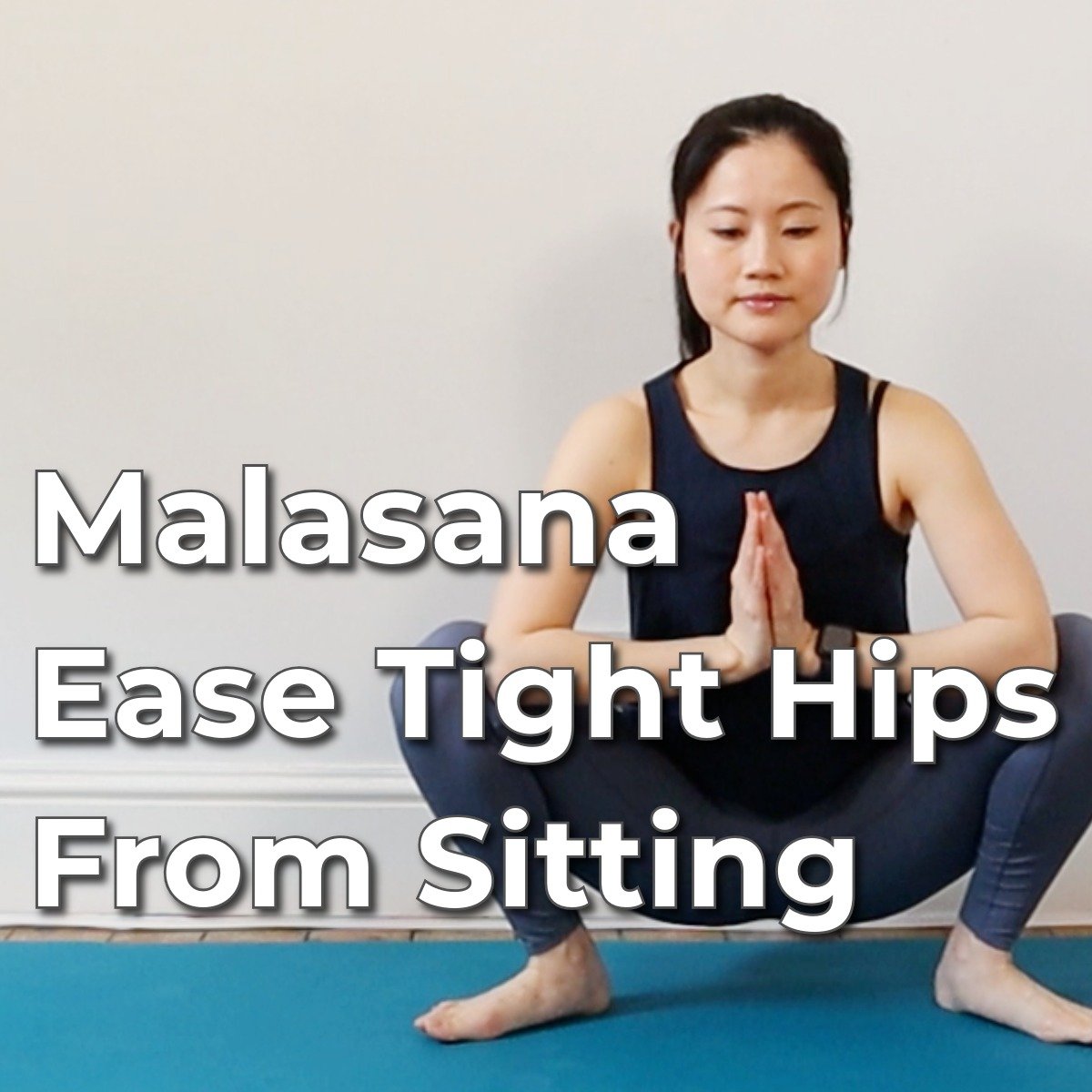
Many of my students, when they first begin practising with me, have never once thought that squatting down is something you need to practise. It seems like such a simple movement, yet for a lot of people, it has quietly become unfamiliar to their body. It's usually only when they try Malasana for the first time that they realise it: their heels lift off the ground, and their body struggles to find balance.
Malasana (Garland Pose) also goes by another name, the Yogi Squat. Squatting down is something the human body is naturally built to do. As babies and young children, we squatted without a second thought. But as our lifestyles have shifted, with long hours sitting in chairs and fewer daily movements that require us to squat, the hip's ability to move through this range has gradually gone dormant.
The tightness that builds up from prolonged sitting and poor posture doesn't announce itself. It sits quietly in the body, until the moment we attempt Malasana, and suddenly, we feel it.
The body hasn't lost this ability. It has simply gone too long without being asked to use it.
Malasana: A Test, and a Practice
Whether a student can move into Malasana naturally is one of the ways I assess their hip mobility. It's a pose that tends to reveal exactly where a student is holding the most tightness, sometimes for the first time.
Practising Malasana regularly offers several benefits for the body.
Benefit One: Hip Mobility
External rotation is one of the ranges of motion we use least in daily life. Sitting for long hours, combined with movement patterns that stay mostly forward-facing, gradually limits the hip's ability to rotate. Malasana works directly on this range, gently and effectively reopening a movement pattern the body has stopped using.
Benefit Two: Circulation in the Legs
Sitting for long periods often leads to poor circulation in the legs, as blood and lymphatic flow slow down in the lower body. Moving into and out of Malasana requires active engagement from the leg muscles, which helps stimulate this circulation. The hips also sit close to the inguinal lymph nodes, so consistent practice supports circulation more broadly and helps ease leg congestion.
Benefit Three: Pelvic Space and the Pelvic Floor
Malasana naturally opens up space in the pelvis, gently stretching and activating the pelvic floor. This is one of the reasons Malasana is considered one of the foundational yoga poses for pelvic health across different movement disciplines.
Benefit Four: Lower Back Relief
When Malasana is done correctly, with the spine held upright, the lower back is gently supported and stretched rather than compressed. This makes it a direct, effective practice for anyone dealing with lower back tightness from prolonged sitting.
Benefit Five: Body Awareness
Malasana tends to reveal exactly where you're tight. It's not a pose you can force your way through: either your hips have enough mobility, or your body will let you know exactly where the limit is. That immediate signal from the body is itself a valuable practice in building body awareness.
Benefit Six: Practice During Pregnancy
Malasana is also commonly used during pregnancy, helping to maintain mobility in the pelvic floor in preparation for labour. We'll be sharing more on Malasana and pregnancy practice in future articles. If you're currently pregnant, our private online yoga classes can help tailor a practice to your specific needs.
Getting Into Malasana
Basic Steps
Stand with your feet slightly wider than hip-width apart, toes turned slightly outward.
Slowly bend your knees and lower into a squat, bringing your palms together at your chest.
Gently press your elbows against the inside of your knees to help open the hips to each side.
Keep your spine upright and find a steady breathing rhythm.
Hold for five to ten breaths, allowing the hips to gradually release.
If you have high or low blood pressure, diabetes, or any other health condition, please check with your doctor before beginning this practice.
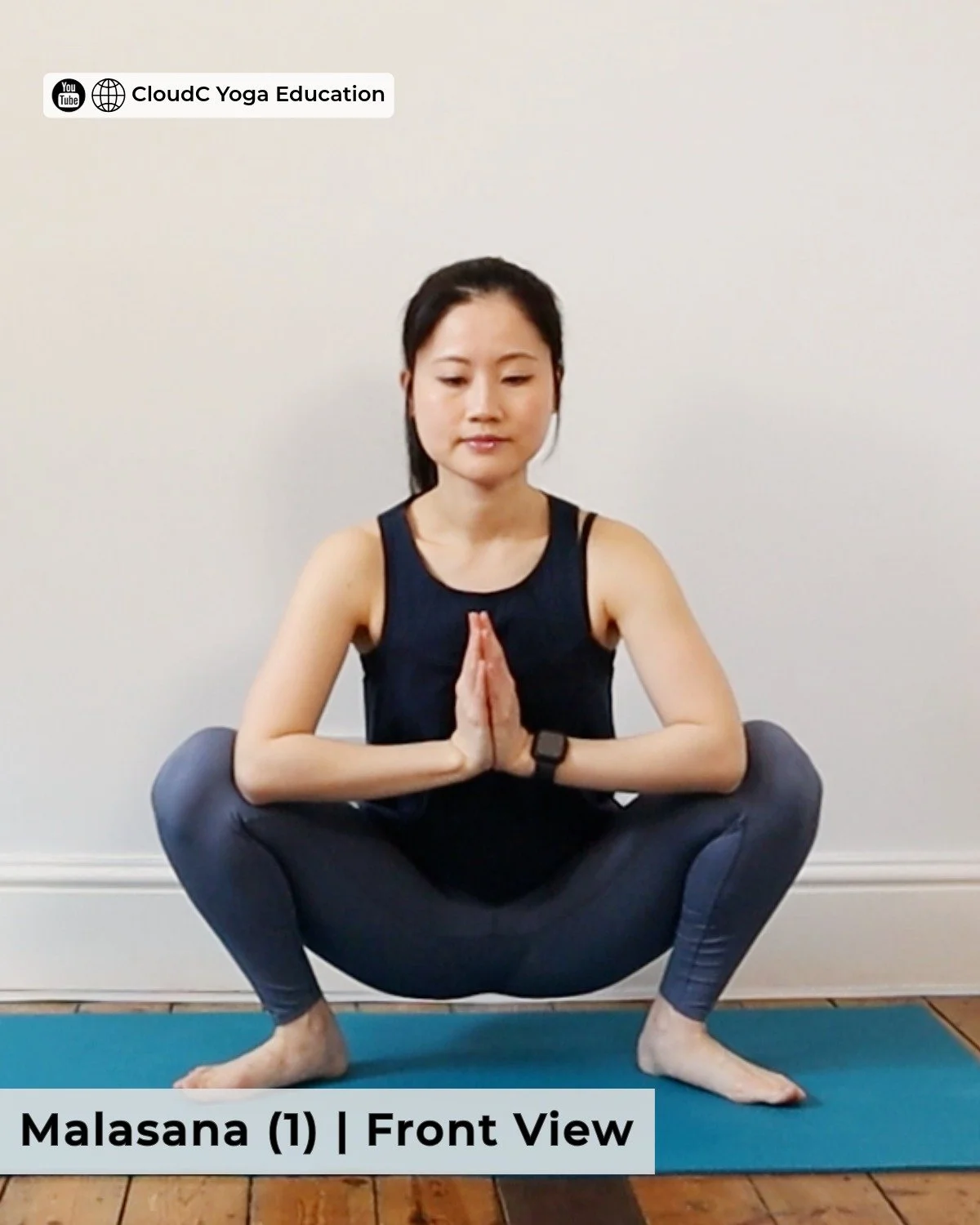
Malasana (front view): hands in prayer position, elbows gently pressing against the inner knees.
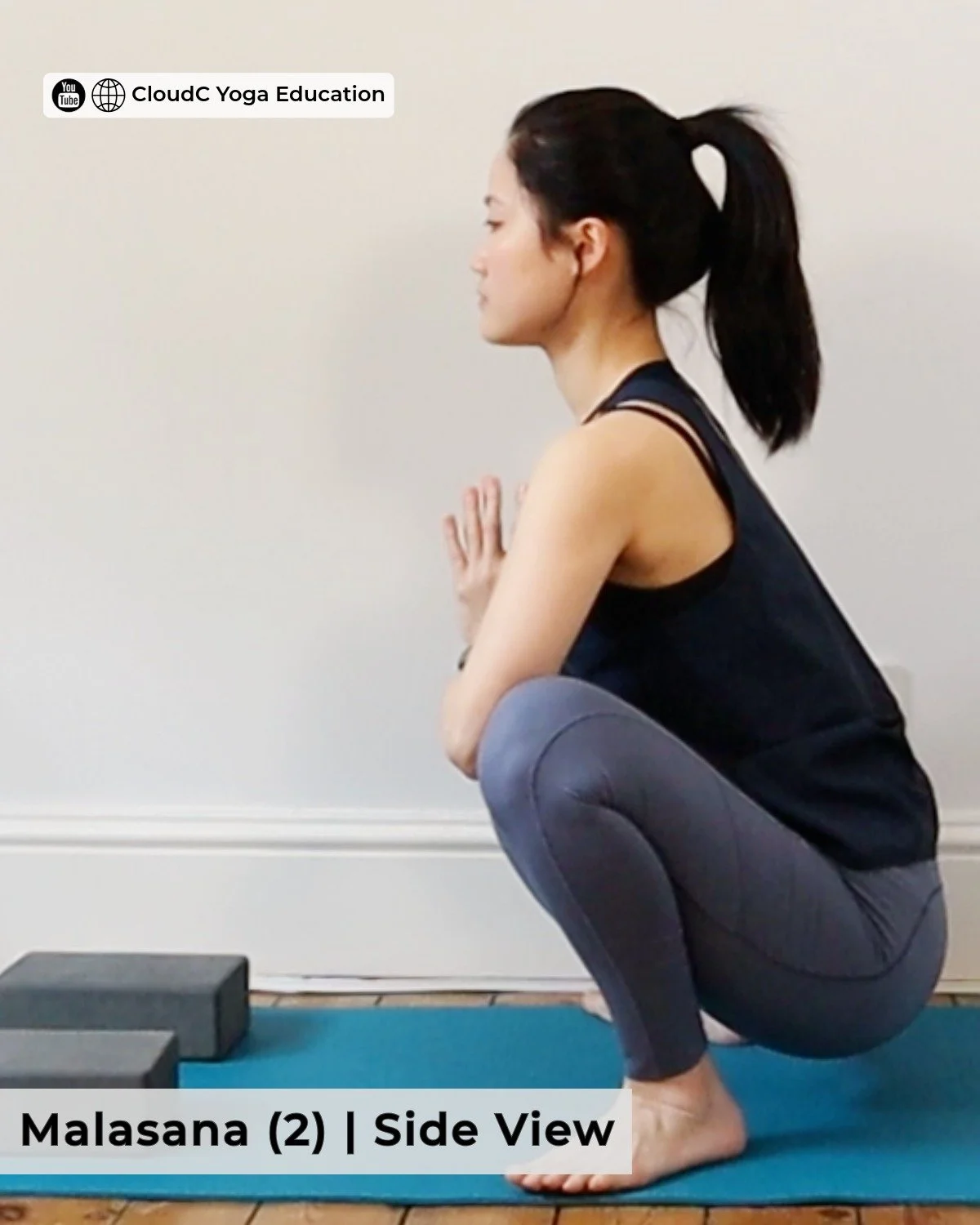
Malasana (side view): use yoga blocks under the heels if they don't reach the ground
Using Props
If your heels can't reach the ground, roll up a blanket or place a yoga block underneath them.
One of the most common things I see in class is students hesitating to use props, worried that needing one means they're "not good enough."
Props do exactly the opposite. They let your body relax in the correct position, rather than forcing your way into a shape you're not ready for. Forcing your way into a pose feels completely different from easing into it with support.
“Using a block or a blanket helps your body ease into the pose safely, so you can build up your range at your own pace.”
For Tight Hips, the Hardest Part Isn't the Pose
For students with tight hips, the first challenge in Malasana usually isn't the pose itself, it's the moment of entering it: the heels won't stay grounded, and the whole body loses its base.
This is simply the body being honest with you. Years of prolonged sitting have quietly narrowed the hip's natural range of motion.
Students often tell me that after their first attempt, they feel like they "can't do it at all." But what I see again and again in class is that the body adapts remarkably well with consistent practice; it just needs time and the right approach.
Instead of forcing the heels down, start by accepting where your body is today. Use a prop to find stability, then let your breath guide the tension out, little by little. Resistance is strongest the first time. By the second or third time you return to the pose, you'll find the hips beginning to open.
Malasana Is a Practice You Can Do Anytime
One of the most practical things about Malasana is that it doesn't require a yoga mat or a change of clothes. When you've been sitting for over an hour and feel your lower back starting to tighten, stand up, find a stable spot, and move into Malasana for a minute or two. Let the hips and lower back find some space again before going back to what you were doing.
It's worth reminding yourself: squatting is an ability the human body is meant to have. We're not born unable to do Malasana. It's the lack of movement built into modern life that has limited this natural range. Bringing Malasana back into daily life is, in a way, helping the body reclaim something it already owns.
“A simple reminder: every time you’ve been sitting for more than an hour, stand up and spend a minute or two in Malasana. No mat, no special space needed, you can practise it anytime, anywhere.”
Start Today: Ease Tight Hips With CloudC Yoga Education
CloudC Yoga Education offers structured private online yoga classes and courses, tailored to each student's physical and mental state, individual anatomy, and specific concerns such as tight hips or back pain, so every student gets exactly the practice they actually need.
Sign up for our newsletter to receive the latest teaching and course updates, or subscribe to our YouTube channel to build a home yoga practice.






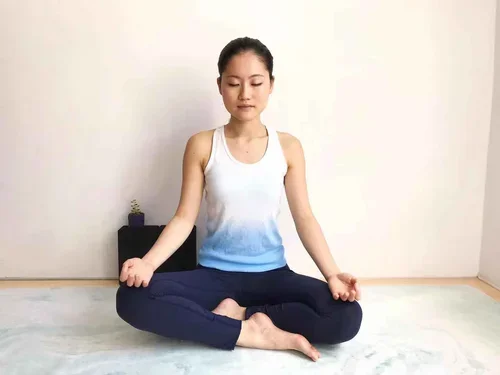
Malasana is a simple squat, yet it's a clear indicator of hip mobility. Prolonged sitting and poor posture can gradually limit this natural range of motion. This article draws on real teaching experience to explore the benefits of Malasana, how to use props safely, and how to bring it into a daily routine.