Your Custom Text Here

A Simple Yoga Practice for a Busy, Anxious Mind

Learn to turn inward with a gentle yoga practice designed to ease an anxious mind. In 25 minutes, create space in your body and experience a peaceful release.
Yoga Practice For Days When Your Mind Is Overwhelmed

Welcome, whether you find this article with a racing anxious mind or are searching for peace of mind. We hope you find a moment of relief in this calm and healing yoga space - CloudC Yoga.

We understand how ironic it sounds to be unable to control your own mind. Sometimes the mind is so packed with lingering thoughts that it never shuts down. Even simple daily life can be hard to get through with persistent worry, racing heartbeat, rapid breathing, and more.

Remember, whenever the mind becomes busy and anxious, you are not crazy. Never doubt yourself. Notice that the complexity of the mind makes us human. When you learn to study your mind and understand your thought patterns, moments of feeling controlled by your thoughts begin to fade.


Letting Go of the Weight You Carry

Yoga is a beautiful companion while we experience life's highs and lows. No one can escape the reality that we all have to wear different hats and take on different responsibilities. Being capable can also be overwhelming.

Ask yourself, when was the last time you truly turned inward, nurturing your body and mind without engaging in responsibilities or standards you are trying to live up to?

Yoga doesn't ask you to be anything but yourself. Roll out your yoga mat, breathe, and do simple stretches. Connect with your body and mind. Your mind, body, and soul deserve your loving care.


Your 25-Minute to Find Calm with Yoga

Starting with just 25 minutes a day or a week is all your mind and body need. Slow down and find your peace.

  1. Cat-Cow & Child's Pose: Allow the rhythm of your own breath to guide the movement of your spine. In Child's Pose, the goal is to feel the breath expanding into your back and feel the body soften and sink a little deeper.

  2. Thread the Needle: Let go of all the heavy weights on your shoulders and your neck, and just breathe. Take this pose for a moment of physical and emotional release.

  3. Sphinx & Cobra: Opening the heart and choosing the version that feels good for you. A perfect backbend isn't the goal. Gently opening the space around your chest is.

  4. Seated Forward Bend: The Forward bend is the best pose to turn inward, just as if you are having a gentle conversation with your body. The stretching sensation is where our body sends a message from an area that's holding on to tension and is ready to release it. As we create space, we get to experience a peaceful release.

  5. Savasana: Our body, mind, and soul are all connected. So when we feel uneasy or anxious, our body also becomes tight. Allow savasana to be your final peaceful rest.

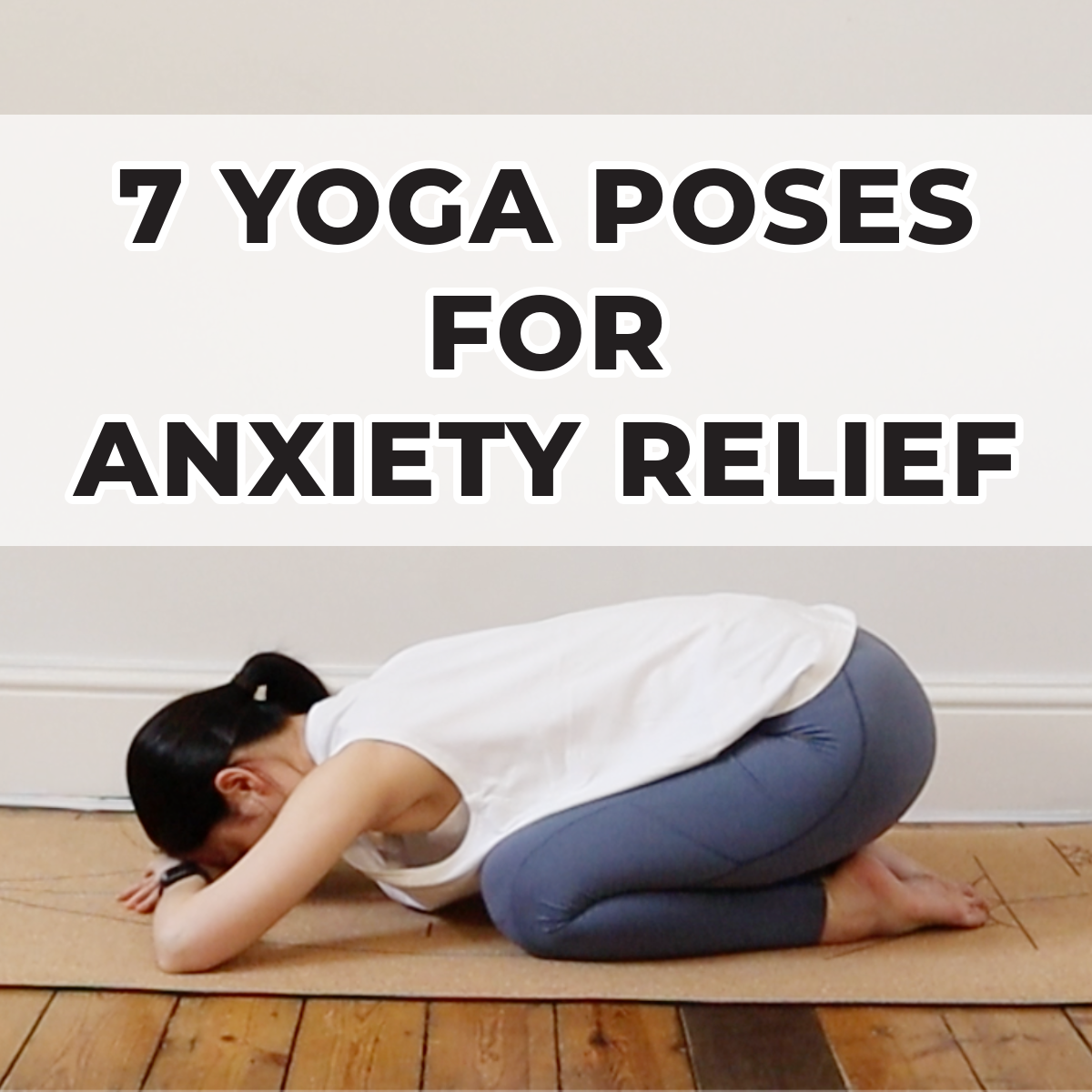
Infographic of 7 gentle yoga poses for anxiety relief. The sequence includes Cat-Cow, Child's Pose, Thread the Needle, Sphinx, Cobra, Seated Forward Bend, and Savasana.

A simple 7-pose sequence to help release anxiety and calm a busy mind. Feel free to save this to your Pinterest board for a day when you need it.


Carry Peace with You

When we take care of our bodies, we also take care of our minds and souls.

Ask yourself, "How do I feel right now?" Sometimes all it takes is a moment of "slowing down." As you slow down, so does the mind.

Remember, you truly deserve to feel this peace.


Read More
Yoga Pose Asana CloudC Yoga Yoga Pose Asana CloudC Yoga

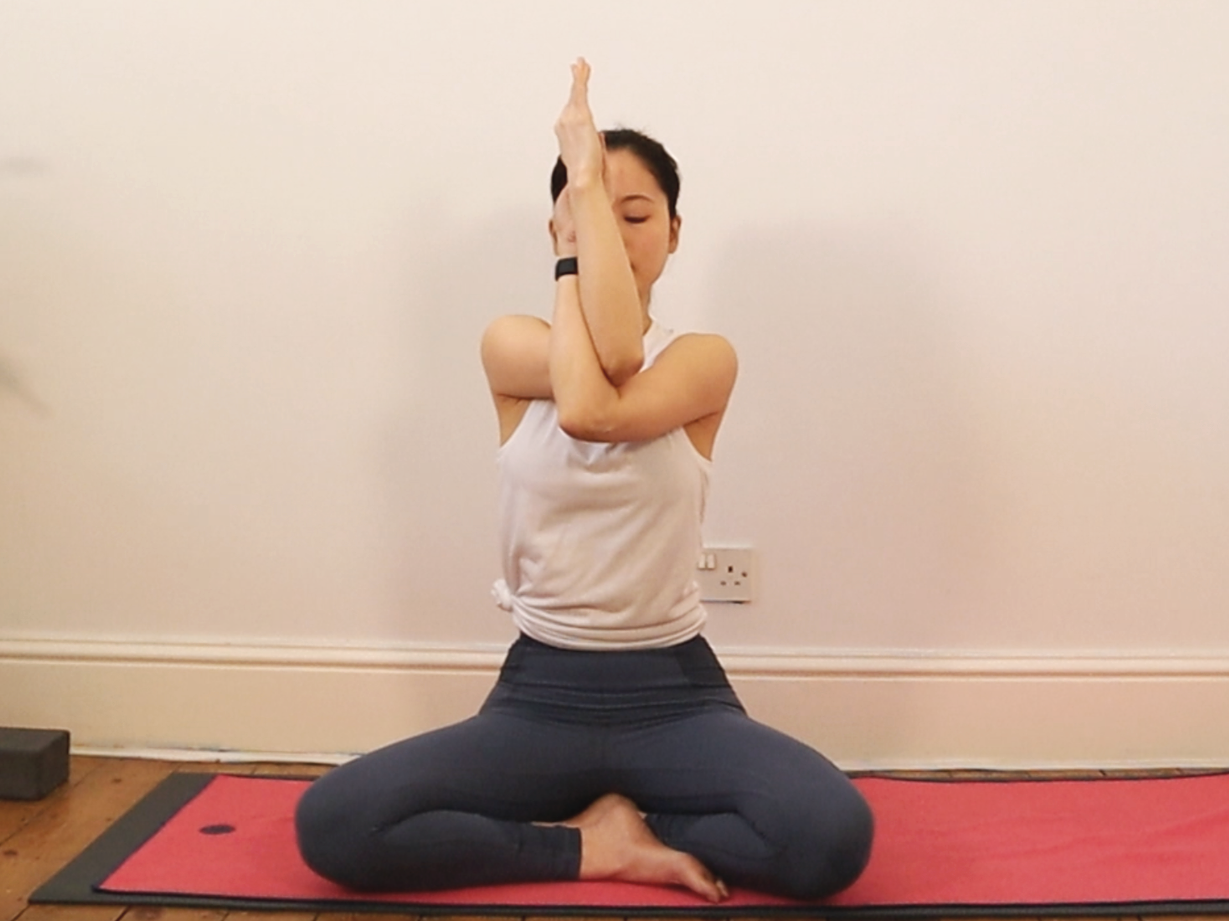
Ease Neck and Shoulder Pain: the Eagle Arm Pose

Are you dealing with persistent neck and shoulder tension from your modern lifestyle? Learn the simple yet powerful Eagle Arm Pose. This daily stretch is key to easing pain, releasing tightness, and finding mental calm before sleep.

It's excellent for releasing tightness right out of your shoulders.

We spend long hours at desks, commuting, or on our phones. Staying in one position causes shoulder and neck tension.

Here's the good news: letting go of shoulder pain is simpler than you think. We can always add simple stretches throughout our day.

Today, we're going to dive into a simple yet powerful pose: The Eagle Arm Pose. It's excellent for releasing tightness from your shoulders. Plus, it’s a wonderful tool when you feel mentally stressed.


Steps for the Eagle Arm Pose (Garudasana Arms)

Steps for the Eagle Arm Pose (Garudasana Arms)

Here are the steps of getting into the Eagle Arm Pose. Alternatively, you can practice along with our yoga video (scroll down to watch). 

  1. Start by extending both arms forward to shoulder height.

  2. Gently cross your right arm over your left.

  3. Wrap your arms around until your palms meet. (Don't worry if they don't touch perfectly.)

  4. Lift your elbows up to shoulder height.

  5. Relax your shoulders away from your ears. Feel your shoulder blades slide softly down your back.

  6. Settle into the final pose and stay here for about 5–10 deep breaths.

  7. When you're ready, gently unwind.

  8. Repeat the same steps on the other side.


Full length video for shoulder and neck tension release.


Practice Daily for Healthy Shoulders

Consistency is necessary for healthy, pain-free shoulders. Think of this as your daily self-care ritual.

Try scheduling a little time for the Eagle Arm Pose every day. It's especially helpful after long hours of desk work or after holding the same pose for a while.

Another great time to practice is right before bed. It helps you release any tension in your body and eases mental stress. This simple routine can prepare you for a good night's sleep.

When you feel ready to go a little deeper, I invite you to try the full-length neck-and-shoulder release video.

Conclusion

Releasing shoulder tension and pain is so much easier than you imagine. Remember, a little bit of daily care, like the Eagle Arm Pose, goes a long way.

Incorporate this simple stretch into your life and feel the beautiful difference! You deserve this space and ease.


Read More
CloudC Yoga Journal, Yoga Pose Asana CloudC Yoga CloudC Yoga Journal, Yoga Pose Asana CloudC Yoga

My Journey to Flexibility: Using the Front Splits to Heal Your Lower Back

The front splits might seem out of reach, a pose reserved for dancers or gymnasts. However, the journey of practising the splits is one of the most effective and healing methods for releasing the chronic tightness and pain stored deep in our hips and lower back. Practice is not about forcing your body into a perfect pose, but rather a calm and patient process of self-discovery. In this article, I share a series of preparatory poses to help you slowly create space and begin your own healing journey.

Have you ever thought you could have a more flexible, pain-free body? I'm Cloud, and like many people, I wasn't born with a naturally flexible body. I want to share my little story with you first.

When I took dance classes in primary school, I was one of the students the teacher had the least hope for. While every other student could easily do the splits, I struggled and couldn't get down. Because of this, when we had competitions, the teacher would put me in the least noticeable position to reduce the chances of our team losing points.

It wasn't until I was at university and happened to see a yoga book in a bookstore that my view on flexibility changed. I learned that in the world of yoga, the emphasis is on the process of practice and the integration of body, mind, and soul. After giving up on stretching for many years, I returned to it. The splits I couldn't do when I was eight years old, I could do more than ten years later, almost without noticing.

The process wasn't about trying to achieve a particular pose. It was about humbly accumulating the work, bit by bit, and peeling away the layers of tightness and stress stored in the body. I'm not sure if you've had the same experience, but I believe everyone can understand the profound joy that comes with having a body that is no longer tight and has more flexibility. It's a delightful feeling for both body and mind.

The front splits might seem out of reach, a pose reserved for dancers or gymnasts. However, the journey of practising the splits is one of the most effective and healing methods for releasing the chronic tightness and pain stored deep in our hips and lower back.

At CloudC Yoga, the core philosophy I want to promote is simple: practice is not about forcing your body into a perfect pose, but rather a calm and patient process of self-discovery. As I say in the video, we are here to "slowly discover our version of the splits through practice."

In this article, I hope to share the front splits practice with you and the deeper meaning behind the yoga practice. In addition to the article, you can follow the video tutorial below to start your journey.


Anatomy Focus: The Key Muscles for the Front Splits

Before we begin stretching, let's first understand the parts of the body we will be stretching. Understanding the muscles you are working on can help you practice more effectively and safely.

  • Hamstrings - Located at the back of your thighs. In modern life, these muscles are often tight due to prolonged periods of sitting, which is a primary cause of lower back pain. Regular stretching is key to releasing physical stress.

  • Hip Flexors (especially the Psoas) - Located at the front of your hips, they are responsible for lifting your thigh towards your body. Prolonged sitting can cause the hip flexors to become short and tight, pulling on the pelvis and leading to poor posture and discomfort.

  • Quadriceps - Located at the front of your thighs. In this practice, they get a deep stretch, which helps promote the health of the knee joint and the flexibility of the entire leg.


More Than a Pose: The Benefits of the Process

Just as in life, when we pursue different goals, the process of getting there often brings us the greatest rewards. The same is true for practising the front splits. Here are a few benefits of practising the splits:

  • Soothe Chronic Pain: When we stretch the hamstrings and hip flexors correctly, we can address the common tight spots that cause lower back pain and hip discomfort, releasing pressure and improving mobility.

  • More Freedom in Daily Activities: With increased lower body flexibility, daily activities can also become easier. After consistent practice, you will find that walking and running feel lighter, and even your sitting posture will be more comfortable.

  • Mind-Body Connection: The front splits are a very deep stretching practice. To practice safely, you must completely listen to your body's signals. In this process, you learn to communicate with your body and understand its messages, enhancing the mind-body connection.

  • Cultivate Patience: For many people, the front splits are a distant goal, but through consistent practice, many can successfully achieve them. During the period of practice and waiting, you cultivate patience.

  • Learn to Relax: In my yoga teaching, I often remind students, "As long as the mind is relaxed, the body will follow." You will realise the importance of rest and relaxing your mind in regular practice.


Five Preparatory Poses Before Practising the Front Splits

To safely explore the front splits, there is no need to force the body into the position. Instead, we use a series of targeted preparatory poses to create space in the body slowly. Here are five core preparatory poses that, through regular practice, will slowly open up your body's space and lead you towards the depth of the stretch.

1. Sun Salutation (Sūrya Namaskāra)

The Sun Salutation is a sequence of movements that serves as a traditional warm-up in yoga practice. It's like a morning dance for the body, gently waking up all the muscles and joints, increasing body temperature and blood circulation, and building a safe and stable foundation for the deeper stretches that follow.

Benefits

  • Gently stretches the whole body, including the hamstrings, hip flexors, and spine.

  • It also builds a connection between breath and movement, helping to focus the mind and enter a state of practice.


2. Standing Forward Bend (Uttanasana)

The Standing Forward Bend is a fundamental yet extremely effective pose that can deeply open up the tightness in the back of the thighs (the hamstrings). When practising, remember to keep your knees slightly bent, especially for beginners, to protect your lower back and knee joints. Our goal is not for the hands to touch the floor, but to feel the relaxation of the entire back and the stretch in the back of the legs.

Benefits:

  • Deeply stretches the hamstrings and calf muscles.

  • Releases pressure on the spine and neck.

  • Practising forward-bending postures also has a calming effect on the mind and body.


Utthan Pristhāsana

Lizard Pose is a deep hip-opening pose. It can simultaneously stretch the outer hip of the front leg and the hip flexor of the back leg. Depending on your flexibility, you can use yoga blocks to adjust the height and the depth of the stretch.

Benefits:

  • An excellent hip-opening pose that can effectively improve hip joint flexibility.

  • Deeply stretches the hip flexors and quadriceps.


Ardha Hanumānāsana

The Half Splits are the most essential preparatory pose in the practice for the full splits. The key to the practice is to keep the hips neutral and the spine long, imagining your heart is extending towards the toes of your front foot.

Benefits

  • Precisely and deeply stretches the entire hamstring of the front leg.

  • Enhances body awareness and teaches how to maintain pelvic stability during a stretch.


This pose adds a gentle twist and stretch to the low lunge, targeting the quadriceps on the front of the back leg and the deep hip flexors. The flexibility of these two areas is the key to whether the front splits can be completed comfortably.

Benefits

  • Stretches the quadriceps of the back leg, which is one of the tightest areas for many people.

  • Further opens the hip flexors to create more space in the hip joint.

  • Gently twists the spine, increasing the body's range of motion and releasing stress.


Enjoy Your Practice Journey

I hope you liked this sharing. Set aside one day a week for deep stretching, allowing your body and mind to open up gradually. Quietly feel your breath, be grateful for your body, and take good care of yourself.

As always, sending you peace and joy. 

💌 Subscribe to CloudC Yoga’s Newsletter & YouTube Channel

If you enjoy the yoga and meditation content we share, you may also like receiving my newsletter and YouTube tutorials:
➡️ Become a free member for CloudC Yoga Newsletter and receive monthly yoga and meditation practice.
➡️ Subscribe to our YouTube channel for weekly updates on meditation and yoga tutorials.


Read More
Yoga Pose Asana CloudC Yoga Yoga Pose Asana CloudC Yoga

Relieve Headaches and Shoulder Tension: 3 Simple Yoga Moves for Daily Relief

Feeling tightness in your neck and shoulders or dealing with stress-induced headaches? This gentle yoga sequence offers three simple yet effective moves to release tension, improve posture, and restore comfort—all in just a few minutes a day. No yoga mat needed!

Find Relief from Headaches and Shoulder Tightness—No Mat Needed

Do you often have a headache at certain times during the day? Or feel your neck and shoulders tense after long hours on the computer or phone? Today, I'd like to share a simple yoga routine to help relax your neck and shoulders, open up your body, and ease the headaches and tension caused by everyday stress.

Common Causes of Neck and Shoulder Pain

You may have experienced headaches or shoulder tightness like many of my students. This is often related to our daily habits—long hours spent on our phones, sitting at the computer, repetitive movements, and poor posture. Over time, these habits lead to muscle imbalance, causing headaches or even numbness in the hands. 

Most people turn to painkillers, but addressing the root cause with relaxation and stretching may offer more lasting relief.


3 Steps to Relieve Neck and Shoulder Pain: Simple Yoga Poses Explained

This is a mat-free yoga practice that you can do on your bed or chair, with no special equipment needed. If your shoulders are particularly tight, you can use a yoga strap, towel, or clothing to assist with the arm bind in the Eagle Arm Pose. Find a quiet, comfortable space, and prepare to begin practising and easing the tension in your neck and shoulders.

Step 1: Side Neck Stretch (Parsva Śīrṣāsana)

Steps
:

  1. Sit comfortably with a relaxed posture. Gently place your right hand on your left ear.

  2. As you exhale, slowly tilt your head to the right, bringing your right ear towards your right shoulder while letting your left shoulder drop.

  3. Adjust the angle slightly: lower your chin or turn your head to feel the stretch along the left side of your neck.

  4. After holding for a moment, switch sides.

Benefits:

  • Relieves neck tightness caused by long hours on your phone or computer

  • Eases tension headaches caused by poor posture

  • Helps relax the muscles around your neck and shoulders, reducing stress


Step 2: Eagle Arms (Garudasana Arms)

Steps:

  1. Raise and flex both arms to 90 degrees, crossing your elbows (with the right elbow on top, or wrap your wrists together).

  2. Let your shoulders sink, avoiding any shrugging.

  3. Switch sides after completing the stretch.

Benefits:

  • Deeply open the muscles around your scapula and the inner shoulder

  • Effectively stretches areas that become stiff from long hours using a mouse or typing

  • Increases flexibility and circulation in the arms, shoulders, and neck


Step 3: Cow Face Pose (Gomukhasana)

Steps:

  1. Raise your right arm from behind and your left arm from above your head, bringing your hands together (if you can't clasp your hands, use a yoga belt or towel to connect your hands).

  2. For an advanced variation, gently lean to the left side to open up the space on the right side of your ribs.

Benefits:

  • Increases shoulder mobility and reduces stiffness and soreness

  • Helps relax the upper back and the area where the neck and back connect

  • Opens up the chest and armpits, promoting deep breathing and circulation


Bonus: Arm Circles

Steps:

  1. Interlace your fingers, push your hands forward, and draw big circles backwards.

  2. Repeat several times, opening up your entire upper body.

Tips: Everyone has different ranges of motion, so it's important to focus on how your body feels.

Benefits:

  • Stretches the entire shoulder girdle and back muscles, promoting blood flow and clearing blockages

  • Relieves upper back pressure, improving minor numbness caused by tightness

  • Enhances overall shoulder and neck flexibility and stability


When Your Body Is Relaxed, Your Mind Follows

This simple yoga routine can effectively ease neck and shoulder tension and reduce headaches. By practicing regularly, you'll notice your body becoming more open, with fewer aches and pains in your neck and shoulders, and your mood will improve as well.

You may experience some temporary tightness after practicing, but a warm bath or a few moments of relaxation will lead to noticeable improvements.

Set aside 5 to 10 minutes each day to quietly focus on your breath, appreciating your body, and showing yourself some love and care.

If you enjoyed this practice, feel free to share it with friends who may benefit—let's spread health and peace together.


💌 Subscribe to Cloud's Joyful Newsletter & YouTube Channel

If you enjoy the yoga and meditation content I share, you may also like receiving my newsletter and YouTube tutorials:

➡️ Join Cloud's Joyful Newsletter and receive monthly yoga practices and spiritual reminders.

➡️ Subscribe to my YouTube channel for weekly updates on meditation and yoga tutorials.


Read More
Yoga Pose Asana CloudC Yoga Yoga Pose Asana CloudC Yoga

Benefits and Four Tips to Master One-Legged King Pigeon Pose (Eka Pada Rajakapotasana)

The King Pigeon Pose, or the Royal Pigeon Pose (Eka Pada Rajakapotasana), is an energizing pose that stretches the shoulders and vertebral column deeply. It also helps regulate the hormonal secretions, particularly those from the thyroid.

Master King Pigeon Pose (Eka Pada Rajakapotasana)


The King Pigeon Pose, or the Royal Pigeon Pose (Eka Pada Rajakapotasana), is an intermediate to advanced level yoga backbend pose. In this pose, the chest is fully opened like a pigeon.  Eka means one, Pada is leg or foot, and Kapota is a pigeon. Rajakapota means the king of pigeons. Hence the name of the pose.

The Benefits of One-Legged King Pigeon Pose (Eka Pada Rajakapotasana) and Backbend

Practising backward bends brings great steadiness to the body, giving an excellent backward opening to the spine and strengthening the back muscles. Backwards Bends cure pain and discomfort due to poor postures, including hunchback, round shoulders, Teck Neck (also known as “text neck” or “screen neck”), back pain etc.

King Pigeon includes all the benefits of the backbend and also includes the following,

  1. The posture stretches the shoulders deeply, allowing the joints to explore mobility, including the shoulder joints, elbow, wrist and small joints at the fingers.

  2. Stretches the vertebral column and the muscles along the spine.

  3. The posture stimulates hormonal secretions of the body, particularly those from the thyroid.

  4. The hip muscles are stretched with an external hip opener in the front leg.

Overall, the One-Legged King Pigeon is an incredible pose that opens the body deeply from head to toe. The opening effect on a backward bend and hip opening is beneficial to regulate modern-day poor postures.

king pigeon fix hunch back and tech neck

Backwards Bends cure pain and discomfort due to poor postures, including hunchback, round shoulders, Teck Neck (also known as “text neck” or “screen neck”), back pain etc.


The Preparation and Counter Pose of One-Legged King Pigeon (Eka Pada Rajakapotasana)

One-Legged King Pigeon is a deep backward bend, and advanced yogis can go deep into the pose. Before attempting the pose, make sure you properly warm up your body and joints. Prepare your body for sufficient shoulder-opening sequence and spinal mobility movement. >> Practice On YouTube: 30 mins Shoulders and Spinal Mobility

Counter Pose: Seated Forward Bend (Paschimottanasana)

Come out from the pose slowly with steady breathing. After the pose, counter the practice with gentle twisting or forward bend. The counter poses include the following,


FOUR Tips To Master One-Legged King Pigeon (Eka Pada Rajakapotasana)

Always keep in mind that practising yoga is not just about physical performance but also about the linkage between the mind and soul. Connecting with your mind and breath is vital when practising advanced yoga posture.

You must train your mind to concentrate and be conscious with every breath. These are the foundations for safe and effective practice.

  1. Be Patient. Rotate your shoulder properly to grip.

  2. Listen to your body. Align your spine to open your chest.

  3. Centre your mind. Find your perfect balance.

  4. Connect with your soul. Breathe and explore.

Keep up the practice, and let me know how it goes. Email me at info@cloudcyoga.com. I am always excited to read your emails.


Read More
CloudC Yoga Journal, Yoga Pose Asana CloudC Yoga CloudC Yoga Journal, Yoga Pose Asana CloudC Yoga

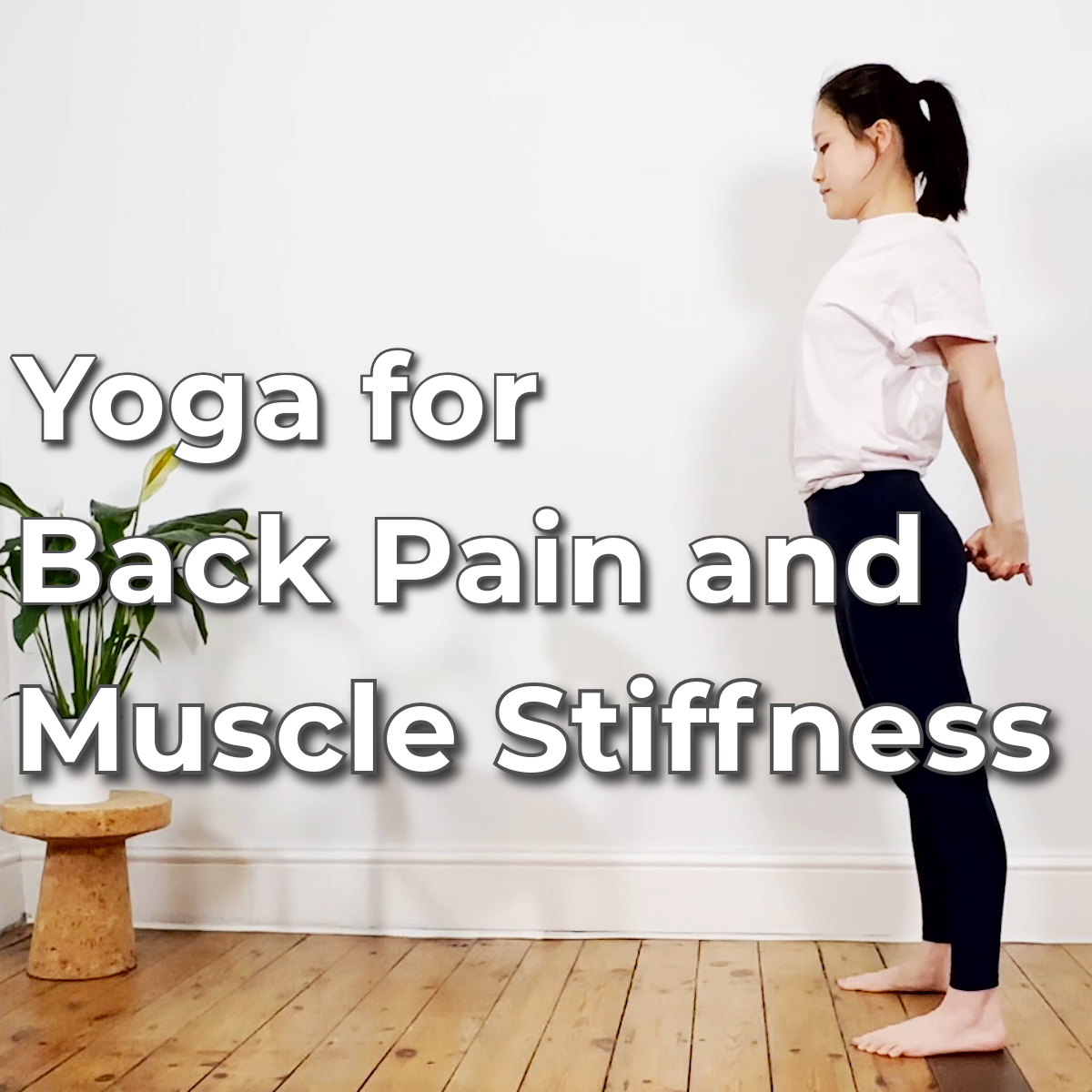
Four Yoga Stretches for Back Pain (Beginner Friendly)

Back pain is closely linked to lifestyle choices and emotional well-being. Yoga and meditation can help relieve discomfort and release mental stress.

Some gentle yoga stretches can be helpful for beginners. Here to highlight the FOUR of them,

  1. Cat Cow Pose (Sanskrit: Viralasana)

  2. Thread The Needles (Sanskrit: Supta Kapotasanaa)

  3. Supine Spinal Twist (Sanskrit: Supta Matsyendrasana)

  4. Knees to Chest Stretch (Sanskrit: Apanasana)

Back pain is our body signalling us to do something to heal.

Many people experience tension in the upper, middle, and lower back. As we age, our bodies accumulate many experiences and stress, which can lead to discomfort over time. Additionally, mental stress can pose emotional challenges when there's no way to release it.

Over the years, many of us have developed challenging relationships with our bodies and minds. I often hear my students say, "My body hates me," or "I can't live with my body anymore." The thing is, what our body wants is completely the opposite - our body loves us so much that it constantly sends messages to remind us to fix it.

The turning point towards a healthier body is to look at the body's "signals" from a different perspective. Since birth, our bodies have been tirelessly working for us, keeping us alive and supporting us in achieving our life goals. It makes sense that sometimes there are some glitches, but it is more of our body telling us, "Hey, something is not working well! Let's check and fix it." Learn to digest the message from a different perspective. Then you will see there's no such thing as a "hostile relationship" between us and our bodies.

15 Min Gentle Yoga for Upper and Lower Back | Meditative Stretch with Guided Meditation


The Link Between Back Pain, Lifestyle and Emotional Wellness

Back pain is closely linked to our lifestyle choices and emotional well-being. In urban environments, back pain is quite common. If you were to survey ten people, you would likely find that more than half experience tightness or pain in their lower back.

Practising yoga with moderate stretching can help relieve discomfort, but understanding the underlying causes can inspire us to take better care of our bodies. Let's look at it from the perspectives of The Body and The Mind.

The Body: Poor Posture is a direct cause of back pain.

Whether you work in an office or another setting, it's common to maintain the same posture for long hours. Our bodies are designed for movement, and staying still for too long can lead to various issues.

The good news is that the solution is quite simple. Dedicating just 10 to 15 minutes each day to practice yoga is a quick fix to alleviate the physical tension that builds up throughout the day.

I often suggest Morning Yoga because it helps to get the body's circulation going first thing in the morning. Opening your body in the morning makes your body and mind more relaxed.

The Mind: Stress-Induced Tension in the Physical Body

Mind and body are forever connected. It is impossible to have a healthy body when our stress level is rocket high. We need to manage stress healthily and keep our emotions calm and peaceful.

Four Yoga Poses for Upper and Lower Back Pain

Often, we simplify emotions into just two categories: happy and unhappy. However, our emotional landscape is much more complex. In "Think and Grow Rich," Napoleon Hill identifies seven distinct types of negative emotions, illustrating the depth of our emotional experiences.

  1. Fear

  2. Jealousy

  3. Hatred

  4. Revenge

  5. Greed

  6. Superstition

  7. Anger

Now we know emotions have a wide range of colours, so next time when you are "unhappy", instead of complaining, start by self-reflecting. For example, if you notice that someone’s social media updates tend to upset you, rather than reacting impulsively, take a moment to ask yourself, "What's behind these feelings?" Through this reflection, you may discover that your discomfort stems from your feelings of "jealousy, resentment, or frustration" and the fact that what another person has said or done probably has nothing to do with it.

When you keep yourself in check and start to notice your emotional patterns, you will make wiser choices about your reactions. Eventually, let go of the emotional pattern that no longer serves you to become a calmer version of yourself. Regular Yoga and Meditation practice is the key to guiding you back from the noisy world out there. Concentrate on improving yourself, enhancing your well-being, and overall becoming calmer and more at peace with yourself and the world around you.


15 Min Gentle Yoga for Upper and Lower Back |with Guided Meditation

This 15-minute morning yoga sequence consisted of four main yoga postures for beginner to intermediate level. I designed this sequence using a guided meditative approach so you can stretch your mental space and ease your mind at the same time.

If you feel intense pressure or discomfort, I advise you to seek professional guidance. Alternatively, you can join my 4-Week Foundation Yoga Course , which is a LIVE interactive online class to help to build a solid foundation for your yoga practice.

  • Level: Beginner

  • Sessions per week: Practice daily

  • Time of day: Best to practice in the afternoon or evening.

  • Types of exercises: Beginner Yoga, Gentle Stretch, Yoga for Back Pain, Yoga for Lower Back Pain

  • Tools needed: Yoga Block x 1

    Note that your safety is our priority. If you have a long-term illness, stress, or uncertain conditions, please consult a doctor or professional before attempting any practices.


Sequence Details: Four Yoga Poses to Relieve Back Pain for Beginners

Let’s break down the Four Key Yoga Poses from this sequence. For details, please practice along with the YouTube Video, or join my in-person or online class to learn more tailored adjustments for your unique needs.

Pose 1: Cat Cow Pose (Sanskrit: Viralasana)

Cat Cow (Viralasana) is a typical pose for most practice. It’s a foundational yet powerful yoga pose for spinal health. The movement in the pose opens the space between each vertebral joint, promoting greater spine mobility from the neck to the lower back. The movement also stretches the muscles around the spine. Synchronise the movement with the rhythm of the breath to promote deeper concentration and relaxation of the mind and body.

Pose 1: Cat Cow Pose (Sanskrit: Viralasana)

Pose 1: Cat Cow Pose (Sanskrit: Viralasana)

Pose 1: Cat Cow Pose (Sanskrit: Viralasana)

Pose 1: Cat Cow Pose (Sanskrit: Viralasana)


Pose 2: Thread The Needles (Sanskrit: Supta Kapotasanaa)

Pose 2: Thread The Needles (Sanskrit: Supta Kapotasanaa)

Pose 2: Thread The Needles (Sanskrit: Supta Kapotasanaa)

  1. Starting from the Table Top Position,

  2. To start from the right side, extend the arms towards the ceiling, then “thread” the right arm to the left side.

  3. Land your right ear on the floor, finding the balance of the pose.

  4. If you feel stable with the pose, extend the upon arm on top of your head. Fingertips touching the floor.

  5. Stay in the pose for five to six breaths, then switch sides.


Pose 3: Supine Spinal Twist (Sanskrit: Supta Matsyendrasana)

  1. From lying down, hug both knees to chest.

  2. Drop both legs to the left side and feel the gentle release from the waist.

  3. To progress further, turn the head to the right side. 

  4. Stay in the pose for 2-3 minutes with gentle, steady breathing. 

  5. Switch sides and stay for an equal amount of time. 

Pose 3: Supine Spinal Twist (Sanskrit: Supta Matsyendrasana)

Pose 3: Supine Spinal Twist (Sanskrit: Supta Matsyendrasana)

Pose 3: Supine Spinal Twist (Sanskrit: Supta Matsyendrasana)

Pose 3: Supine Spinal Twist (Sanskrit: Supta Matsyendrasana)


Pose 4: Knees to Chest Stretch (Sanskrit: Apanasana)

Pose 4: Knees to Chest Stretch (Sanskrit: Apanasana)

Pose 4: Knees to Chest Stretch (Sanskrit: Apanasana)

Apanasana is a great pose that gently stretches the upper, middle, and lower back.

This pose is simple and safe. For a quick stretch, you can also do it in your bed. Just make sure your mattress is not too soft and sinks your body, which can level out the stretching effect.

The best thing about this pose is that it is easy to perform and requires no tools. However, for those who experience tension around the neck, you may support your head with a yoga block or a pillow (if you are practising in bed).

Stay in this pose for about 2 minutes, close your eyes, breathe, and allow your mind and body to just relax.


Conclusion

Back pain is closely linked to lifestyle choices and emotional well-being. Yoga and meditation can help relieve discomfort and release mental stress.

Some gentle yoga stretches can be helpful for beginners. Here to highlight the FOUR of them,

  1. Cat Cow Pose (Sanskrit: Viralasana)

  2. Thread The Needles (Sanskrit: Supta Kapotasanaa)

  3. Supine Spinal Twist (Sanskrit: Supta Matsyendrasana)

  4. Knees to Chest Stretch (Sanskrit: Apanasana)

Let's continue the yoga journey together,

  1. Practice on CloudC Yoga YouTube, or

  2. Join Free Online Membership for the latest free yoga teachings.

  3. Join my Online Yoga Class for more personalised practice.


Read More
Yoga Pose Asana CloudC Yoga Yoga Pose Asana CloudC Yoga

Headstand Transition from Front Splits

If you practice yoga long enough to comfortably perform Headstand (Sirsasana) and Front Splits (Hanumasana), explore more creative space with this transition. While Headstand is more dominant in strengthening, Front Splits focus more on lengthening. Combining these two yoga asanas offers an excellent opportunity to experience the balance of energy in yoga—the Yin and Yang, the Sun (Ha) and Moon (Tha).

If you practice yoga long enough to comfortably perform Headstand (Sirsasana) and Front Splits (Hanumasana), explore more creative space with this transition. While Headstand is more dominant in strengthening, Front Splits focus more on lengthening. Combining these two yoga asanas offers an excellent opportunity to experience the balance of energy in yoga—the Yin and Yang, the Sun (Ha) and Moon (Tha). Most of us practice Hatha Yoga, and this perfect balance in the body is also the quality we strive to seek in our minds.


What Makes This Transition Feel So Good: My Personal Experience

I have personally practised yoga for nearly 15 years. Headstand and Front Splits are my must-practice in my Hatha Yoga sessions. I love the strength Headstand offers me.

Front Splits were my dream pose. I was on the school Modern Dance team for a few years, but unfortunately, the stretching techniques I learned from dancing class did not work for me. I fancy Front Splits, and yoga led me to the way!

Despite the day's practice intention, my sequence includes opening my body with mobility and strengthening asanas. At the end of the sequence, I usually reserve a period for inversion practice. This transition is one of my favourites because it concludes my practice—it tests my range of motion and strength after my yoga session.

Inversion gives me a different perspective on life. To stay in the pose, I have to remain highly focused. Transtition with front splits makes me feel more alive. I can move up and down in any way I enjoy! There are no limitations in the way we use yoga to express ourselves—Working on our body is to work on our mind.


What Are The Benefits Of Practising This Transition?

Practising Front Splits (Hanumanasana) into Headstand (Sirsasana) can increase full-body coordination, including for the mind, body, and neurons. It also strengthens and lengthens the arms, legs, and spine.

Practising inversion draws our minds to a high level of concentration. With regular practice, our minds will become increasingly prone to staying concentrated. It's important for all of us to undergo this training, especially in situations where distractions arise and things happen quickly. Maintaining a high level of concentration is the key to achieving our goals efficiently.


Cautious and Safety in this practice

Transitioning from Front Splits into a Headstand involves Arm Balance, Inversion, and Deep Mobility techniques. Practitioners should master both Front Splits and Headstand before attempting this transition.

It is always best to practice with an experienced teacher whom you can trust and who understands your unique condition to practice safely and effectively.


Read More

Morning Yoga Can Be A Game Changer in Life.

As Ayurveda says, "How you start your day is how you are going to feel for the rest of the day." Even if you are not a fanatic of Ayurveda or Yoga, this statement is hard to disagree with. Starting the day with a yoga routine infuses us with the fountain of energy to lift the day and prepare us with the firm mindset to deal with whatever is going to happen on the way. With thousands of hours of teaching yoga under my belt, the best advice I have ever given to my students and clients is that you will never regret building a habit of starting your day with morning yoga. It is truly a Game Changer.

As Ayurveda says, "How you start your day is how you are going to feel for the rest of the day." Even if you are not a fanatic of Ayurveda or Yoga, this statement is hard to disagree with. Starting the day with a yoga routine infuses us with the fountain of energy to lift the day and prepare us with the firm mindset to deal with whatever is going to happen on the way. With thousands of hours of teaching yoga under my belt, the best advice I have ever given to my students and clients is that you will never regret building a habit of starting your day with morning yoga. It is truly a Game Changer.

Most of my students and clients are at the height of their careers, and fitting a yoga session into their busy days seems out of reach. Some may opt for a night class after long hours of day work, but it is only sometimes the best option since the physical and mental body are already very drained - the body is under low battery mode. We all know that health is wealth, and honouring our body with a well-balanced lifestyle is essential to keep us going. This dilemma of working hard for a career and working out for the body has the urgency to be resolved.

To work around this phenomenon, I suggest that my students prioritise yoga practice in the morning, which, for most of them, results in tremendous benefits for their well-being and other positive impacts revolving around their lives. Rather than saying "Benefits of Morning Yoga", I am more prone to describe it as the "Positive Side-Effect of Morning Yoga".

Some say life is an adventure, and some say it is a game, what do you think? Life is so interesting that one decision can lead you to the adventurous unknown. Imagine today, we all decide to do one thing right for our life every day; in 365 days, everything seems to be getting right altogether, not just for ourselves but also for the people and the community around us.


Imagine today, we all decide to do one thing right for our life every day; in 365 days, everything seems to be getting right altogether, not just for ourselves but also for the people and the community around us.
— Cloud Chan-Moosa


How does morning yoga work, and what are the positive side effects?

1. Lifestyle Change: Start small and make it your habit.

Most of the time, people overestimate the effort required to start practising yoga and think that a practice is only a practice when it takes at least 30 minutes or more.

I encourage my students to begin by dedicating just one day a week to practice, starting with a brief 15-minute session. Once you get used to practising for 15 minutes once a week, you can gradually increase the frequency to more days or extend the duration of your practice sessions. Take small steps and incorporate morning yoga into your daily routine. Just as we need to brush our teeth daily, we should also arrange a time to nurture the mind and body through yoga.

Looking back, when I first introduced morning yoga to my students as self-practice and morning sessions at the yoga studio, it was not a popular option. As time passed, the benefits of morning yoga stood the test of time. More and more students joined the tribe because they all realised how powerful it was for them to start their day energised with yoga practice. If countless others are already taking steps to improve themselves each day, what's stopping you from doing the same?


2. Mindset Shift: Let peace be the tone of your day.

The primary focus of morning yoga practice is connecting our body and mind with deep breathing to balance our nervous system. Conscious breathing helps balance our sympathetic nervous system (SNS, fight or flight) and parasympathetic nervous system (PNS, rest and digest). We need to learn to respond to different situations wisely and avoid being overly stimulated by SNS, which can lead to overstress.

When we start the day in a rush and are overwhelmingly distracted by the outside world, our sympathetic system is actively stimulated, ready to protect and prepare us to fight or flight—even if we are not in acute danger.

Constant stress from the outside world can keep the fighting mode ON all the time, and morning yoga can help bring our system back to balance. In yoga practice, you return to the reservoir of your peaceful energy. Start with deep breathing awareness, scan your body, move, and let go of tension. Set your tone for the day at peace before reconnecting with the outside world. Deep breathing expands your lung capacity and, at the same time, soothes your nervous system. Even if the outside world is chaotic, a Peaceful state of mind guides you to respond calmly, bringing harmony to the workplace and the community. Be the first to make the change and spread Peace.


3. Physical Win: Better weight management with a healthy mindset

Regular yoga practice can help regulate your body weight, whether overweight or underweight, and it all starts with the right mindset towards your lifestyle. Before we validate this point, we should know that to attain an ideal healthy body weight is not merely about diet but a healthy mindset to see our life as a whole.

As mentioned earlier, morning yoga can help us set a peaceful tone for the day; with a peaceful worldview, we can make better life choices. For example, when we are not emotionally overwhelmed, emotional eating can be minimised, and eating disorders can be avoided.

Our body systems function better when we wake up regularly to work out.

  • The muscular system is trained with light body weight movement in yoga;

  • The nervous systems are calmer and at ease;

  • The cardiovascular system and respiratory systems benefit from deep breathing practices;

  • Digestive systems are aided with morning movement and function better;

  • The immune system is boosted when our stress hormones are at a healthy balance.

Ever since my students started to pick up morning yoga, most of them began to notice physical changes in one to three months, depending on their frequency of practice. It’s not just the change from the internal system but also reflected with more toned muscles, regulated body weight and shinning skin! Some of my students even look younger as they persist in morning yoga for over 6 months or more.


4. Willpower Up: Start your day with good energy instead of endless scrolling on your phone.

Getting out of bed right after waking up is a struggle, especially now we have that little digital device (our phone) to scroll with. Let's face it: how many days are you relying on "endless scrolling" to wake you up? Have you ever counted the minutes or hours you spent scrolling before "truly get out of bed"?

Trade that 15 minutes of scrolling for a quick morning yoga sequence can invite good blood flow for your whole body. Overcome the temptation to stay passively on content consumption or stay lazy in bed. Level up your willpower, get up immediately after the alarm and start practising yoga first thing in the morning.

A good yoga flow eases the stiffness stored over a long night's sleep. Kickstart your day with yoga mobility and strength practice, allowing blood to flow from head to toe, envigorating us from the inside out. Over time, build up the stamina of willpower to overcome other areas of life.


20-Min Morning Yoga - About This Yoga Sequence

This 20-minute morning yoga sequence mainly consisted of 9 yoga postures for beginner to intermediate level. The poses require more strength from the wrist. If you feel intense pressure or discomfort from the wrist, seek professional guidance. Alternatively, you can join my 4-Week Foundation Yoga Course - a solid foundation is the shortcut to success.

  • Level: Beginner to Intermediate

  • Sessions per week: 2-3 times per week

  • Time of day: Best in the morning or any other time.

  • Types of exercises: Beginner Yoga, Simple Stretching, Basic Strength

  • Tools needed: Optional to have one yoga block or thick book.

    Note that your safety is our priority. If you have a long-term illness, stress, or uncertain conditions, please consult a doctor or professional before attempting any practices.


Sequence Details: Nine Poses to Practice for Morning Yoga

Let’s break down the Nine Key Yoga Poses from this sequence. For details, please practice along with the YouTube Video, or join my in-person or online class to learn more tailored adjustments for your unique needs.

Pose 1: Spinal Extension

Morning Yoga Pose 01 Spinal Extension

Morning Yoga Pose One: Spinal Extension

Spinal Extension is a simple exercise. Inhale, extend the arms towards the ceiling and exhale arms down. Repeat for 5 to 10 rounds.

The benefit of spinal extension is to wake up our spine after long hours of sleep at night, opening the space between each vertebrae. Synchronizing the movement with the breath draws in fresh oxygen into our lungs, waking up every cell inside our body.


Pose 2: Forward and Backward Bend

Forward and Backward Bend is a deepening version of Spinal Extension. Inhale, arms up and open your chest; exhale, dive forward into a forward bend. Repeat for around 5-10 rounds.

The benefit of this pose is that it allows full front and back body stretching. The movement is accompanied by breath and proper alignments, giving the body an opportunity to kick-start mobility right in the morning.


Pose 3: Plank Pose (Sanskrit: Phalakasana)

Morning Yoga Plank Pose

Pose 3: Plank Pose (Sanskrit: Phalakasana)

The plank pose is no stranger to everyone and is one of the most essential poses in the Vinyasa Yoga Family.

It is an excellent pose for training and toning all body muscles. Whether held statically or as part of movement practice, plank challenges endurance and willpower.

It is also one of the best poses for body weight management. If your goal is to lose weight or increase muscle mass, it is a great pose you don’t want to miss from your routine.


Pose 4: Cat Cow (Viralasana) | Benefits for Spine and Shoulders

Cat Cow (Viralasana) is a typical pose for most practice. It’s a foundational yet powerful yoga pose for spinal health. The movement in the pose opens the space between each vertebral joint, promoting greater spine mobility from the neck to the lower back. The movement also stretches the muscles around the spine. Synchronise the movement with the rhythm of the breath to promote deeper concentration and relaxation of the mind and body.


Pose 5: Core Crunch

Pose 5: Core Crunch

This is a variation of Plank Pose with a stronger core-strengthening effect. Core-crunching pose is a combined movement that requires full-body strength, core engagement, and mobility. Regular practice of Core-Crunching Pose can tone the muscles and enhance full-body mobility.


Pose 6: Revolved Lunge Pose (Sanskrit: Parivrtta Anjaneyasana)

Lunging is the foundation of this pose. The twisting movement in this pose can stretch the back muscles and also press the abdomen region to massage the intestine. If you easily get constipated, adding twisting postures in the morning can benefit you, facilitating the body's detoxification process.


Pose 7: Puppy Pose (Sanskrit: Uttana Shishosana)

Pose 7: Puppy Pose (Sanskrit: Uttana Shishosana)

Puppy Pose helps to fully extend the spine and stretch the shoulders. Regular practice can help restore a healthy spinal curve and open the chest, countering the effects of hunching. It also stretches and opens the shoulders, which benefits those with tight shoulders.


Pose 8: Cobra Pose (Sanskrit: Bhujangasana)

The Cobra Pose is excellent for stretching the back muscles along the spine and allows good chest expansion to open the upper front body region. If you live a sedentary lifestyle and spend a lots of time on screen-based activities (i.e. working at the office, checking out cell phone), Cobra is a great pose to help combat daily bad postures. The benefits of cobra pose include the following,

Morning Yoga - Cobra Pose

Pose 8: Cobra Pose (Sanskrit: Bhujangasana)

  1. Enhance full body flexibility.

  2. Exercise and strengthen back muscles.

  3. Stretches and expands the chest and ribs to enhance breathing capacity.

  4. Gently press the abdomen to massage the internal organs.

  5. It may help reduce and relieve menstrual discomfort.


Pose 9: Seated Forward Bend (Sanskrit: Paschimottanasana)

Morning Yoga - Seated Forward Bend

Pose 9: Seated Forward Bend (Sanskrit: Paschimottanasana)

Seated forward can stretch the entire body from the legs to the back. To learn more about the proper alignments of Seated Forward Bend, please refer to the article listed below.


Conclusion

Morning Yoga can be a game changer in one’s life, positively impacting our Lifestyle Change, Mindset Shift, Physical Win and Willpower Up. The 9 Key Yoga Poses for Morning Yoga include the following,

  1. Spinal Extension

  2. Forward and Backward Bend

  3. Plank Pose (Sanskrit: Phalakasana)

  4. Cat Cow (Viralasana)

  5. Core Crunch

  6. Revolved Lunge Pose (Sanskrit: Parivrtta Anjaneyasana)

  7. Puppy Pose (Sanskrit: Uttana Shishosana)

  8. Cobra Pose (Sanskrit: Bhujangasana)

  9. Seated Forward Bend (Sanskrit: Paschimottanasana)

Practice with CloudC Yoga on YouTube, or join my Online Yoga Class for more personalised practice. See you soon!


Read More