
How Front Splits Practice Releases Chronic Body Pain
The front splits might seem out of reach, a pose just for dancers or gymnasts. However, practising the splits is one of the most effective ways to release chronic tightness and pain deep in the hips and lower back.
At CloudC Yoga, our core philosophy is that practice is not about forcing your body into a perfect pose but a process of self-discovery. As mentioned in the video, we are here to "slowly discover your own front splits through regular practice."
Anatomy Focus: The Key Muscles for the Front Splits

Key muscles involved in front splits include the hip flexors, hamstrings, and quadriceps.
Understanding the basic anatomy of front splits can help protect your practice. See the key muscles for front splits below.
Hamstrings - Located at the back of your thighs. These muscles are often tight due to prolonged sitting, a primary cause of lower back pain. Regular stretching is key to releasing physical stress.
Hip Flexors (especially the Psoas) - Located at the front of your hips, they lift your thigh towards your body. Prolonged sitting can cause them to shorten and tighten, pulling on the pelvis and leading to poor posture and discomfort.
Quadriceps - Located at the front of your thighs. The quadriceps can get a deep stretch while practising the front splits, which helps promote the health of the knee joint and the flexibility of the entire leg.
More Than a Pose: The Benefits of the Process
Just as in life, pursuing goals often brings the greatest rewards. The process of developing the front splits is rewarding too. Here are a few benefits of practising the splits:
More Freedom in Daily Activities: Greater lower-body flexibility makes everyday movements easier. With consistent practice, walking and running feel lighter, and sitting becomes more comfortable.
Mind-Body Connection: Practising front splits requires deep stretching and careful attention to your body’s signals. By listening closely, you learn to communicate with your body and better understand its needs, strengthening the mind-body connection.
Cultivate Patience: For many, the front splits are a distant goal, but with consistent practice, they can be achieved. During this time, you cultivate patience.
Learn to Relax: "When the mind is at ease, the body follows." Through regular practice, you'll discover how essential it is to rest and relax your mind.
Five Preparatory Poses Before Practising the Front Splits
To safely explore the front splits, there is no need to force the body into the position. Instead, we use a series of targeted preparatory poses to create space in the body slowly. Here are five core preparatory poses that, through regular practice, will slowly open up your body's space and lead you towards the depth of the stretch.
1. Sun Salutation (Sūrya Namaskāra)
The Sun Salutation is a classic warm-up in yoga practice.
Benefits
Gently opens the whole body, including the hamstrings, hip flexors, and spine.
It also builds a connection between breath and movement, helping to focus the mind and enter a state of practice.
2. Standing Forward Bend (Uttanasana)
The Standing Forward Bend gives the back body a good stretch.
Benefits:
Deeply stretches the hamstrings and calf muscles.
Releases pressure on the spine and neck.
Practising forward-bending postures also has a calming effect on the mind and body.
3. Lizard Pose (Utthan Pristhāsana)
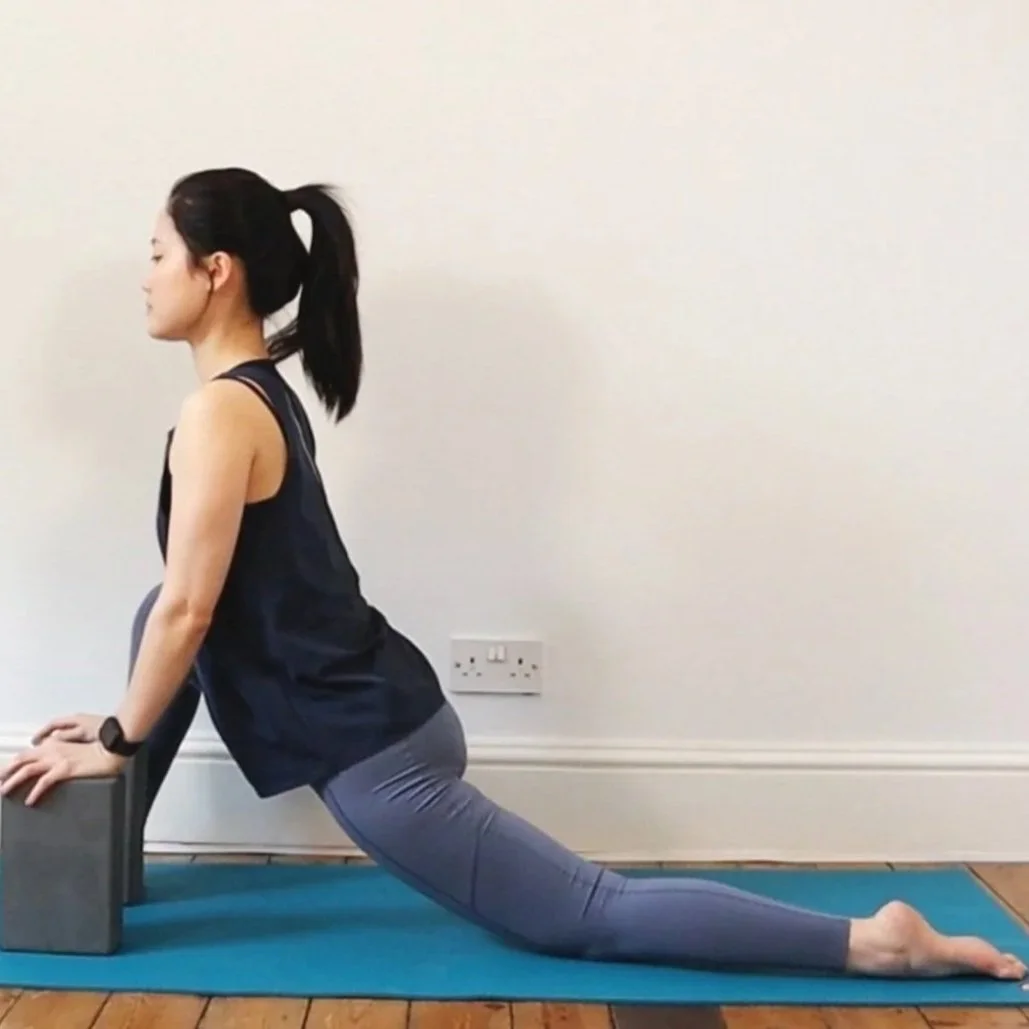
3. Lizard Pose (Utthan Pristhāsana)
Lizard Pose is a deep hip-opening pose. It stretches the outer hip of the front leg and the hip flexor of the back leg. Depending on your flexibility, you can use yoga blocks to adjust the height and depth of the stretch.
Benefits:
An excellent hip-opening pose that can effectively improve hip joint flexibility.
Deeply stretches the hip flexors and quadriceps.
4. Half Splits (Ardha Hanumānāsana)
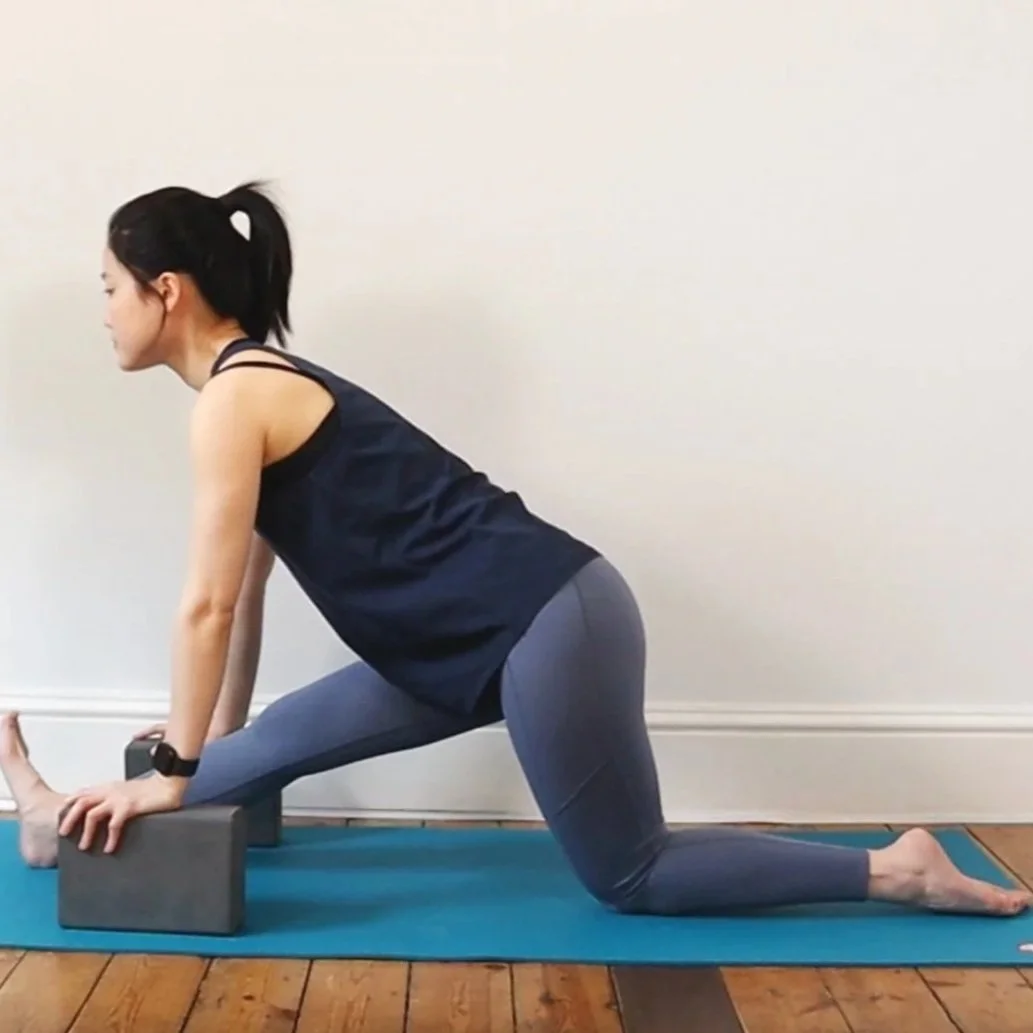
4. Half Splits (Ardha Hanumānāsana)
The Half Splits are the most essential preparatory pose for the full splits. The key is to keep the hips neutral and the spine long, imagining your heart extending towards the toes of your front foot.
Benefits
Precisely and deeply stretches the entire hamstrings of the front leg.
Enhances body awareness and teaches how to maintain pelvic stability.
5. Low Lunge with Quad Stretch

5. Low Lunge with Quad Stretch
This pose targets the quadriceps of the back leg and deep hip flexors. Flexibility in these areas is essential for achieving the front splits comfortably.
Benefits
Stretches the quadriceps of the back leg, which is one of the tightest areas for many people.
Further opens the hip flexors, creating more space in the hip joint.
Gently twists the spine, increasing the body's range of motion and releasing stress.








Malasana is a simple squat, yet it's a clear indicator of hip mobility. Prolonged sitting and poor posture can gradually limit this natural range of motion. This article draws on real teaching experience to explore the benefits of Malasana, how to use props safely, and how to bring it into a daily routine.