
Swollen Legs After Prolonged Sitting, Standing and Long Flights
Do your legs and feet feel different in the morning and in the evening? By the end of the day, you may notice swollen legs. This is common after sitting for long hours, or after a flight.
I first designed this practice for one of my students. She often took long flights for work, and after each one, her legs felt very uncomfortable.
She is not the only one who feels this way. Many of my students sit or stand for long periods at work, and by evening, their legs feel swollen. For them, a simple yoga practice after work can be very helpful.
Sometimes, the circulation in your legs just needs a little help to get moving again. These three yoga stretches are a good place to start.
Three Yoga Stretches for Swollen Legs
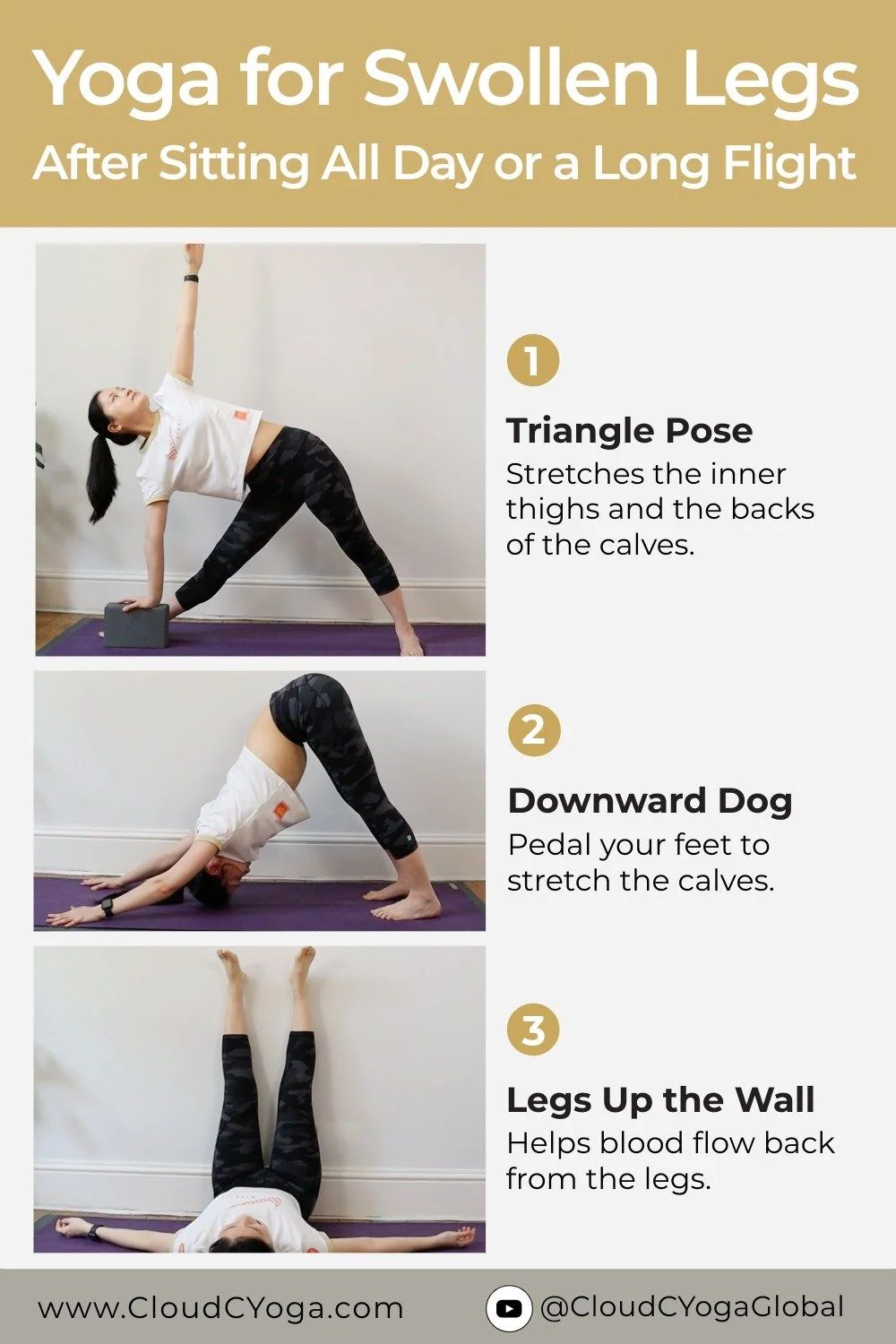
1. Triangle Pose (Trikonasana)
Triangle Pose is a standing side stretch. With regular practice, it gradually creates more space in the body.
How to Do Triangle Pose
Stand facing the long side of your mat, with your feet wide apart, a little wider than your shoulders. Find a width where you feel steady. If needed, place a yoga block next to your right foot.
Open your arms out to the sides.
Slowly extend your upper body to the right.
Rest your right hand on the block, your shin or the floor. Choose what feels comfortable.
Repeat on the other side.
Benefits of Triangle Pose
It stretches the inner thighs and the backs of the calves.
Some people also feel a stretch along the side of the waist.
Feel the stretch through your legs, which can help ease swelling.
2. Downward-Facing Dog (Adho Mukha Svanasana)
Downward-Facing Dog is one of the foundational poses in yoga. The body forms an upside-down V shape, and it is also a gentle inversion.
How to Do Downward Dog
Start in a Standing Forward Bend. Place your hands on the floor and walk your feet back into Downward Dog.
Adjust your upper body. Lengthen through your shoulders and maintain a neutral spine.
Breathe gently and slowly straighten your legs to feel the stretch. If your legs don’t straighten easily, keep your knees bent.
Pedal your feet, bending one knee and then the other, to stretch your calves.
Beginners can stay for three to five breaths.
Benefits of Downward Dog
Downward Dog stretches almost the whole body, from the shoulders and back to the hamstrings, calves and ankles. After a long day at a desk or on your feet, it’s a good way to let go of built-up tension.
If your legs tend to swell, you’ll likely feel the stretch most in your calves as you pedal your feet.
With regular practice, Downward Dog stretches the legs, which can help improve circulation and ease swelling.
Stretching can also ease everyday aches and pains, such as shoulder and back pain.
To learn more about Downward Dog, including beginner modifications, read Downward Facing Dog: Essential Yoga Posture and Beginner Modifications for Maximum Benefits.
3. Legs Up the Wall (Viparita Karani)
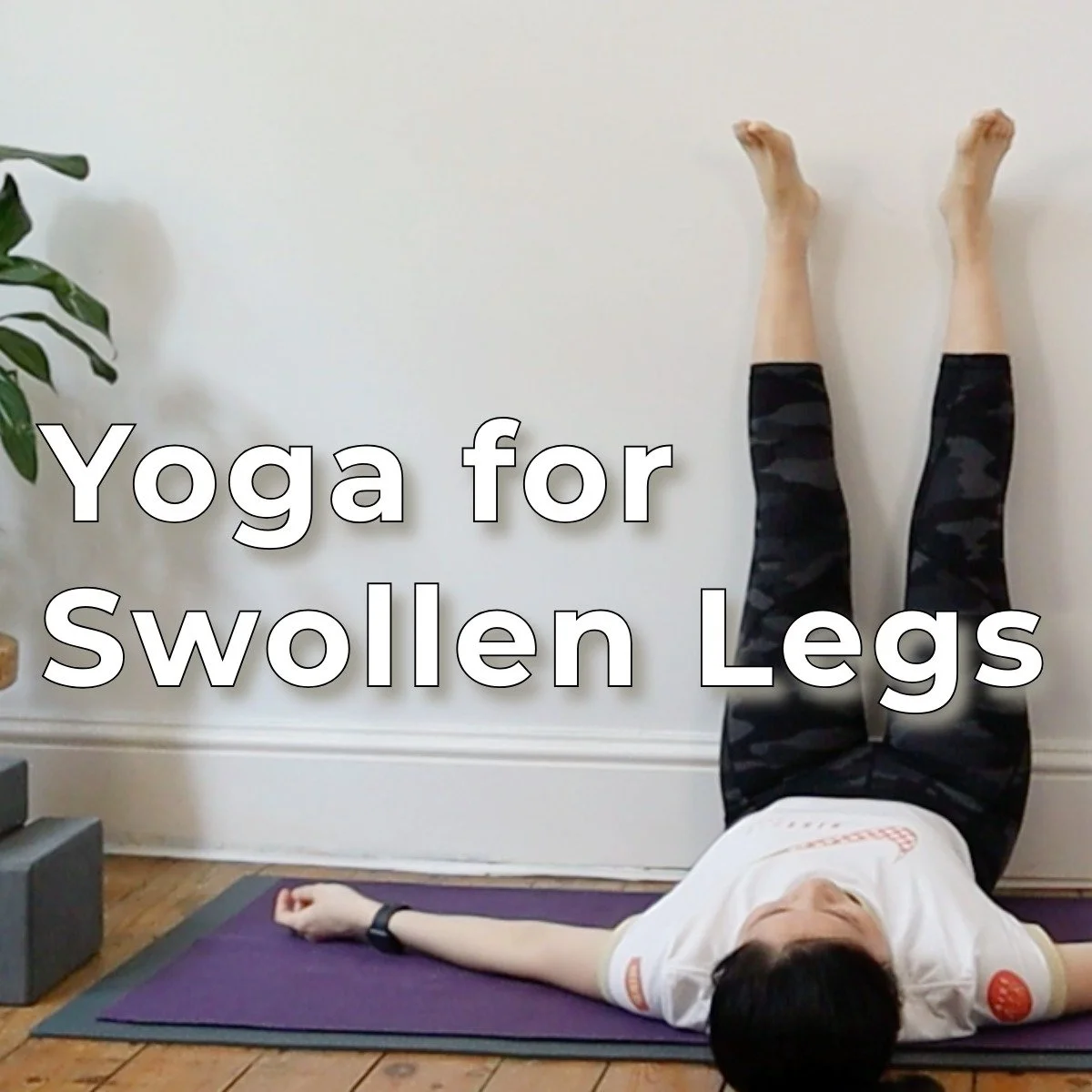
Legs Up the Wall is the classic pose for swollen legs. It is a beginner-friendly inversion, especially suited to people who sit or stand for long hours.
How to Do Legs Up the Wall
Sit on the floor facing the wall. Move your hips closer to the wall until the distance feels comfortable.
Slowly lift your legs up the wall. Lie back and let your upper body relax on the floor.
(Optional) Open your legs out to the sides to a comfortable width and feel the stretch in your inner thighs.
Benefits of Legs Up the Wall
With your legs raised, gravity helps blood that has pooled in your legs flow back to the heart more easily, which can ease swelling.
It gently restores the body and gives the mind space to settle.
Make It a Regular Practice
Practise at your own pace, and turn your focus inward. What matters is how your practice deepens over time.
A healthy body and mind comes from practice you keep up in the long term. The benefits go beyond easing swollen legs, and you may notice your overall wellbeing improve too.
CloudC Yoga Education offers structured private online yoga classes and courses, tailored to each student's mind-body health, body type, and specific concerns such as swollen legs or poor circulation, so every student gets exactly the practice they actually need.
Sign up for our newsletter to receive the latest teaching and course updates, or subscribe to our YouTube channel to build a home yoga practice.





Downward Facing Dog and 2 Variations for Beginners" is a helpful guide for those new to yoga. The article introduces the classic Downward Facing Dog pose and provides two variations tailored specifically for beginners. Whether you're looking to improve flexibility, build strength, or simply relax, this guide offers a great starting point for your yoga journey.